Originally reported on November 14, 2026, at 18:30 (UTC+8). The account below describes the EEZ design and examples reported at that time, not a newly announced change.
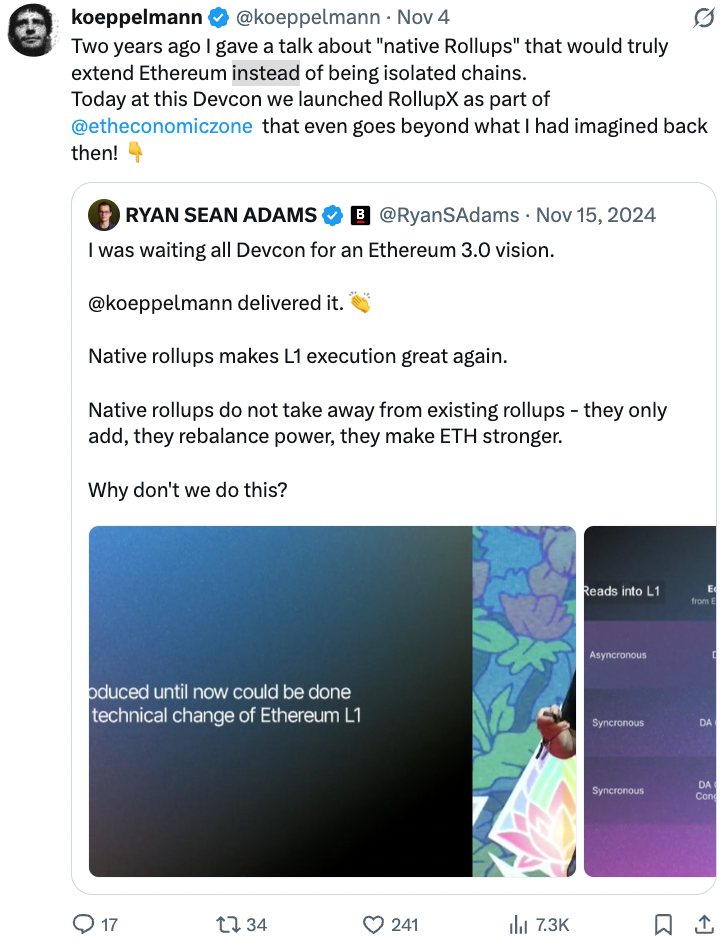
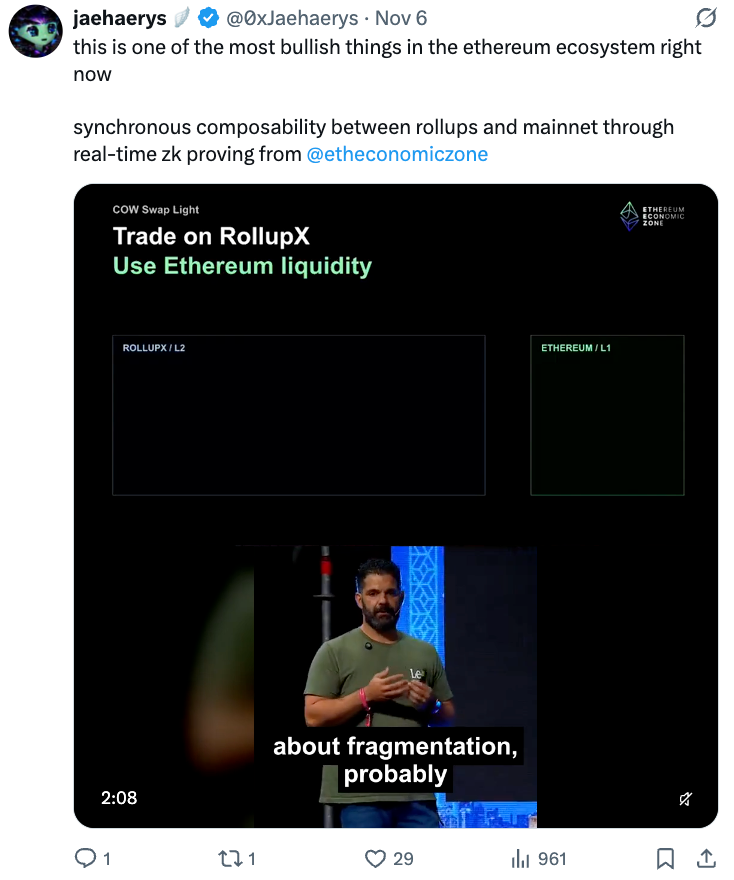
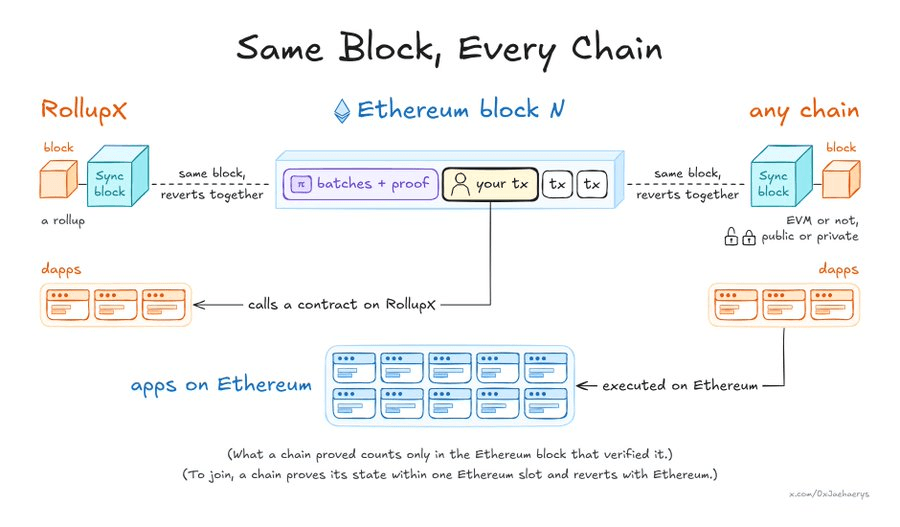
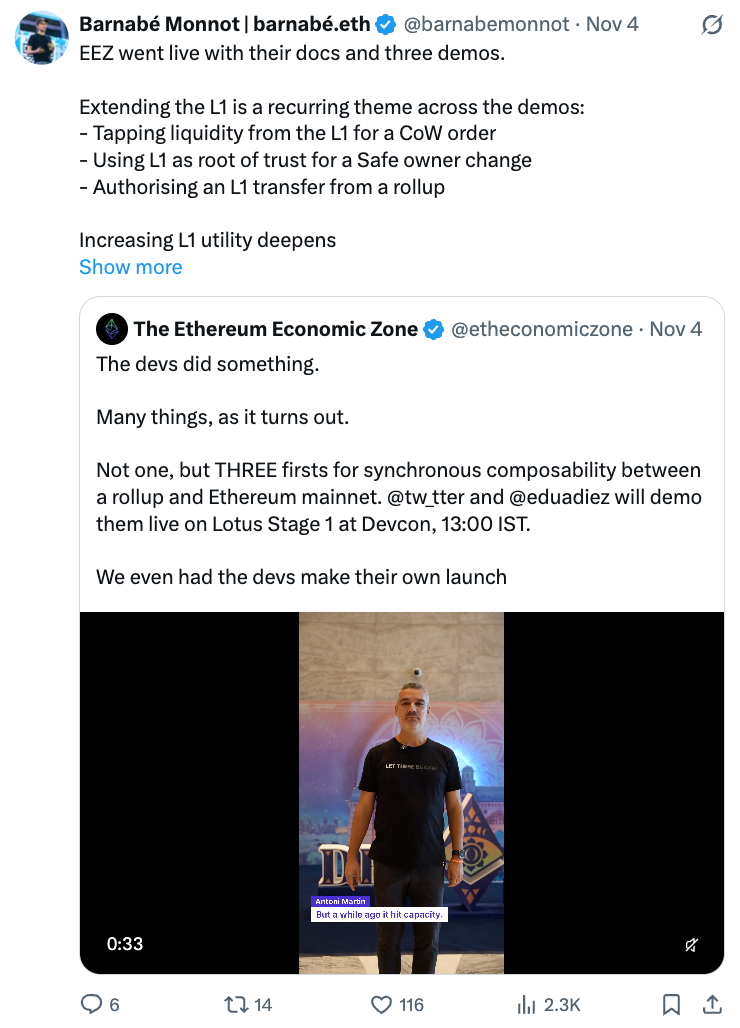
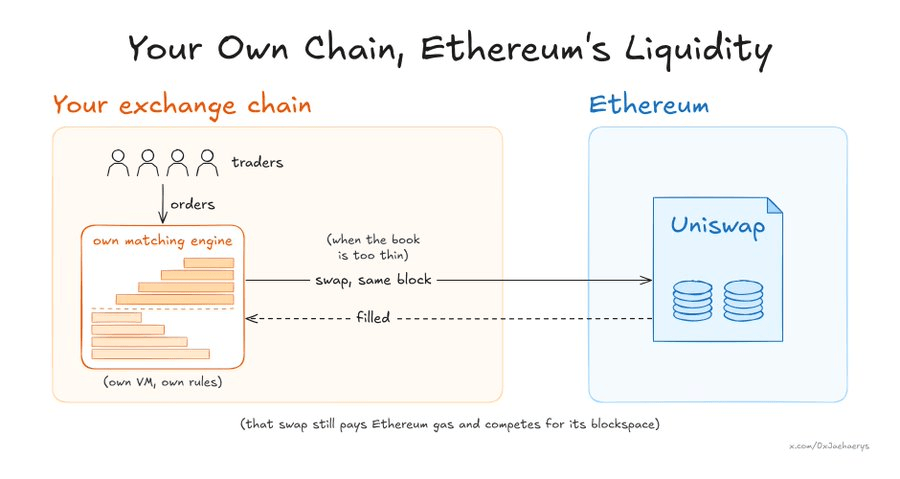
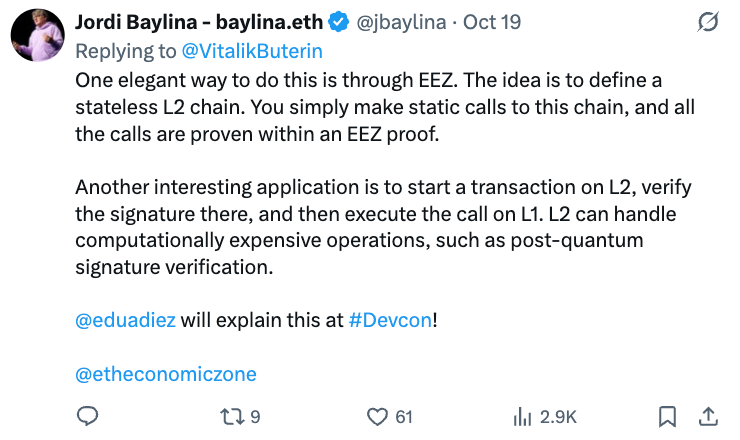
Using an Ethereum application from a rollup typically involves asynchronous steps across chains. The Ethereum Economic Zone (EEZ) proposes a different workflow: a connected rollup could call contracts on Ethereum or another connected chain as part of one transaction. EEZ is not a new chain or software stack. It consists of Ethereum contracts and rules connecting participating chains.
What must a chain provide?
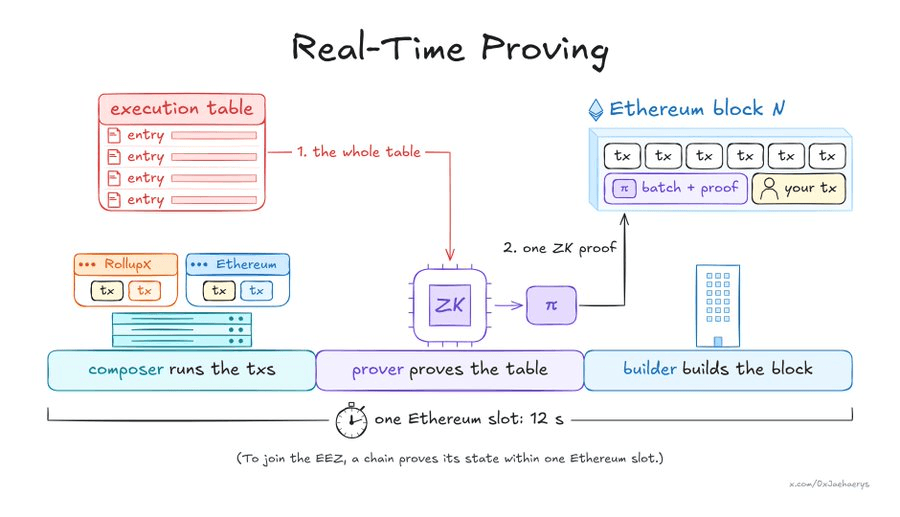
According to the original account by 0xJaehaerys, a chain must prove its state within one Ethereum slot—12 seconds—and roll back with Ethereum if Ethereum reorganizes. The rollback requirement prevents one half of a cross-chain transaction from remaining in place after the other half disappears. A connected chain can retain its own virtual machine, transaction ordering and access rules.
How is a synchronous call prepared?
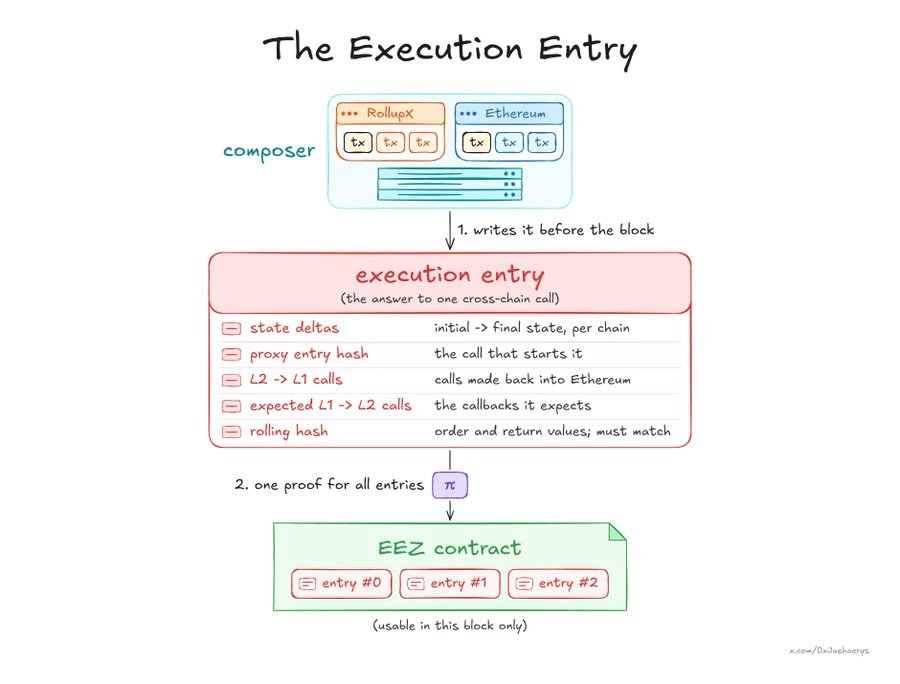
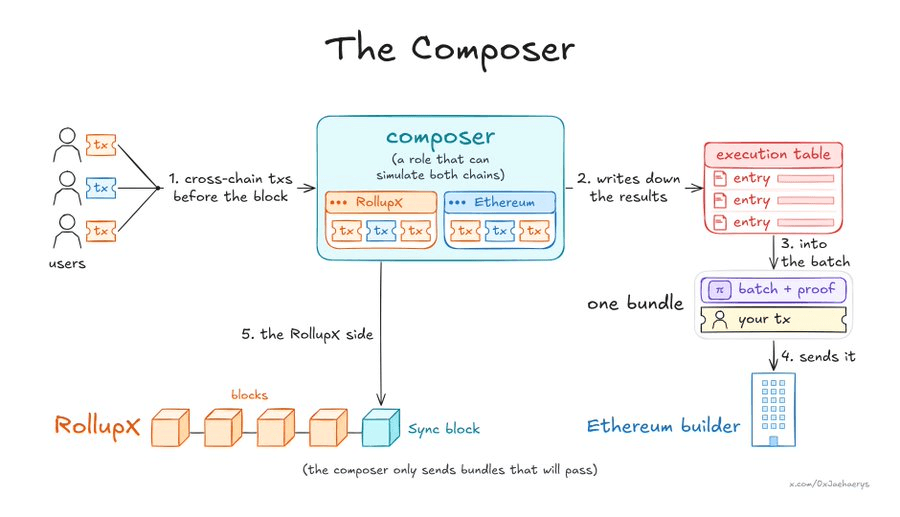
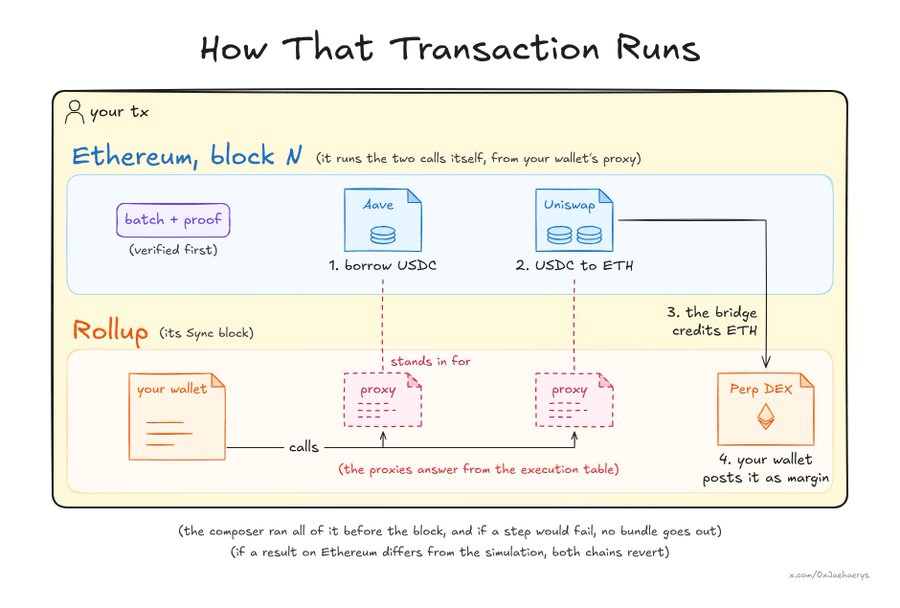
- A composer simulates the transaction on each involved chain before the Ethereum block is built. It records cross-chain calls and their expected answers in an execution table.
- The chain produces a proof. The composer sends a bundle containing the batch, execution table and proof to a builder, ahead of the user’s transaction. The EEZ contract verifies the batch before the user’s transaction runs.
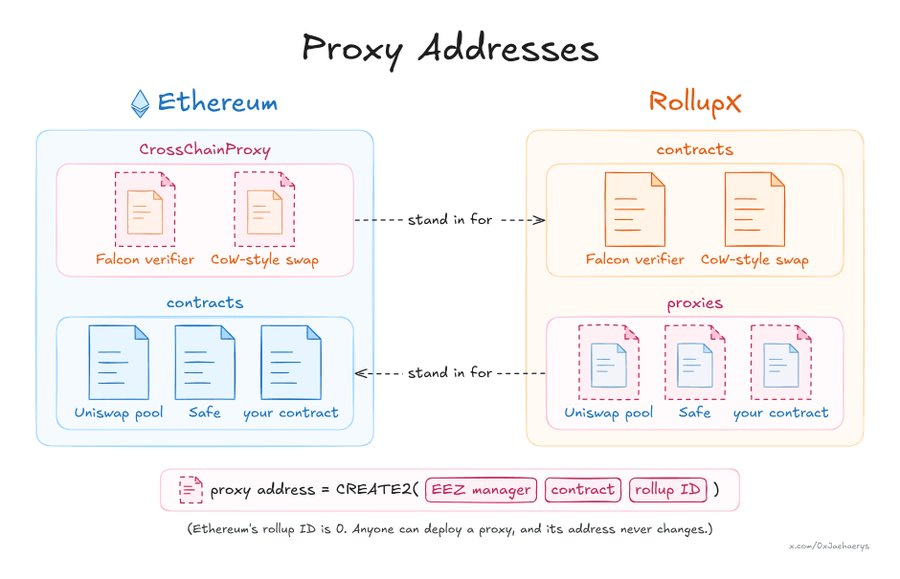
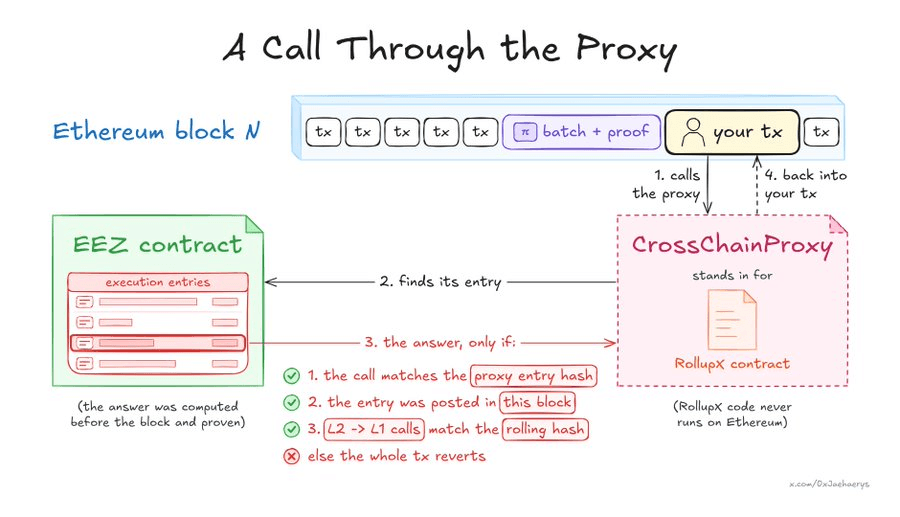
- A proxy handles the call. A contract calling across chains uses a proxy on its own chain. The proxy supplies an answer only when the call matches the simulation, its table entry arrived with the batch in the same block, and the specified callback checks match. If actual Ethereum execution differs from the simulation, the account says the operations on both chains revert.
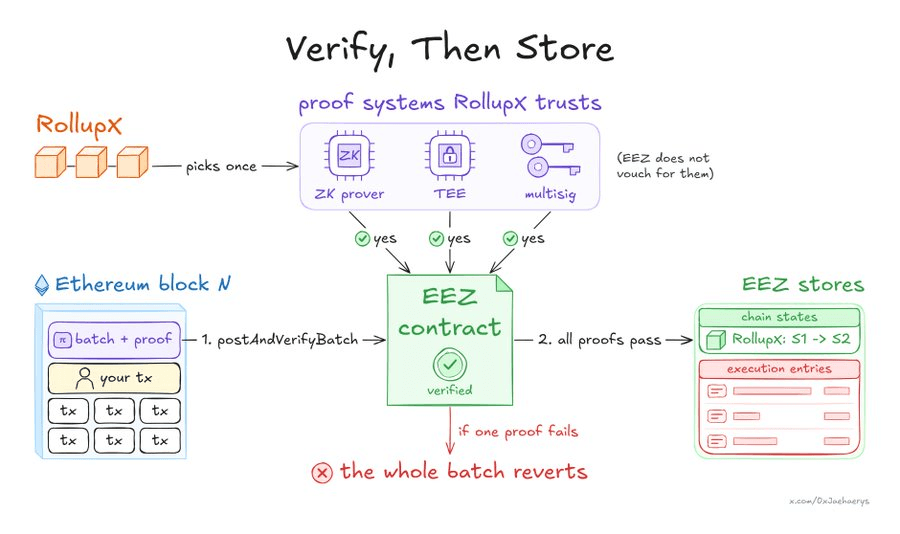
This is a description of the proposed execution path, not a procedure readers can carry out with an ordinary wallet. The account says rollup owners choose which proof systems to trust—including ZK proofs, trusted execution environments or multisignatures—and EEZ does not endorse those choices.
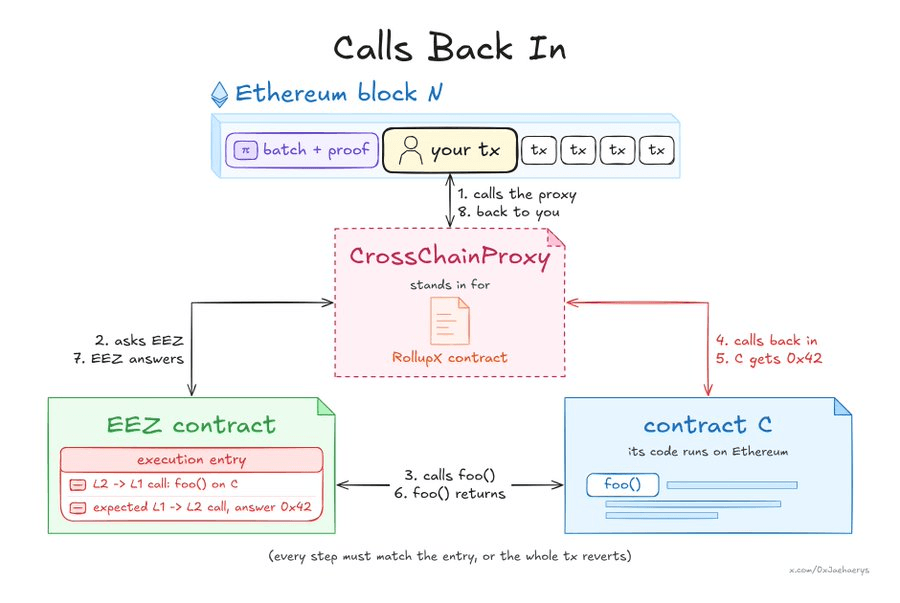
The author gives an example in which a rollup transaction borrows USDC through an Ethereum Aave proxy, swaps it through a Uniswap proxy, and deposits the resulting ETH as trading collateral. That example requires collateral to have been placed at the borrower’s Ethereum wallet-proxy address beforehand; it does not remove that prerequisite or the cost of Ethereum gas.
Limits matter: cross-chain calls must pass through a composer that sees the unencrypted transaction before block production. Synchronous calls also depend on Ethereum block space and an external builder; the account says validator-built blocks without an external builder do not carry them. A fast chain may have to wait for its next synchronized block to reach Ethereum. These constraints are part of evaluating the design, rather than evidence that every rollup can use it without trade-offs.
Source: panewslab.com (originally published 2026-11-14 18:30 UTC+8)