In a report published on November 11, 2026, Helius said its permissionless Solana Privacy Ring was live on mainnet. The release gives developers a way to build applications around encrypted balances and confidential transfers. Helius described institutional Custom Rings separately: they were still undergoing security audits, with a mainnet launch expected in the fourth quarter of 2026.
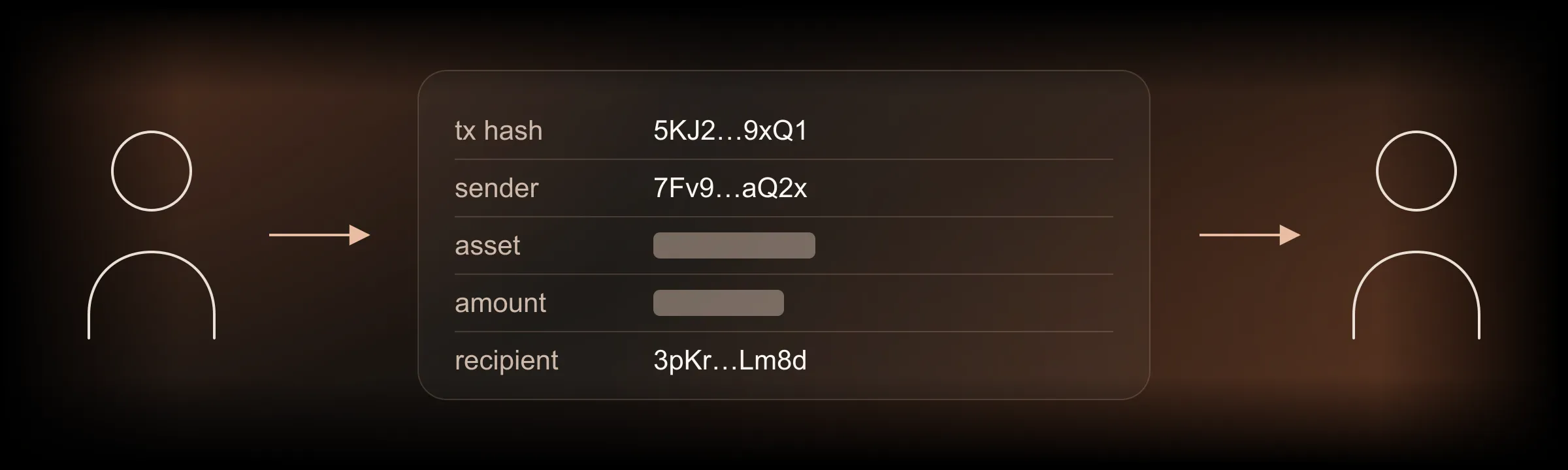
What is private—and what remains visible?
The default Ring is a shielded pool that encrypts the asset type and amount of a confidential transfer. Wallet addresses remain public. According to Helius, an account holder can use a viewing key to read their own balance, and the asset owner must sign transactions.
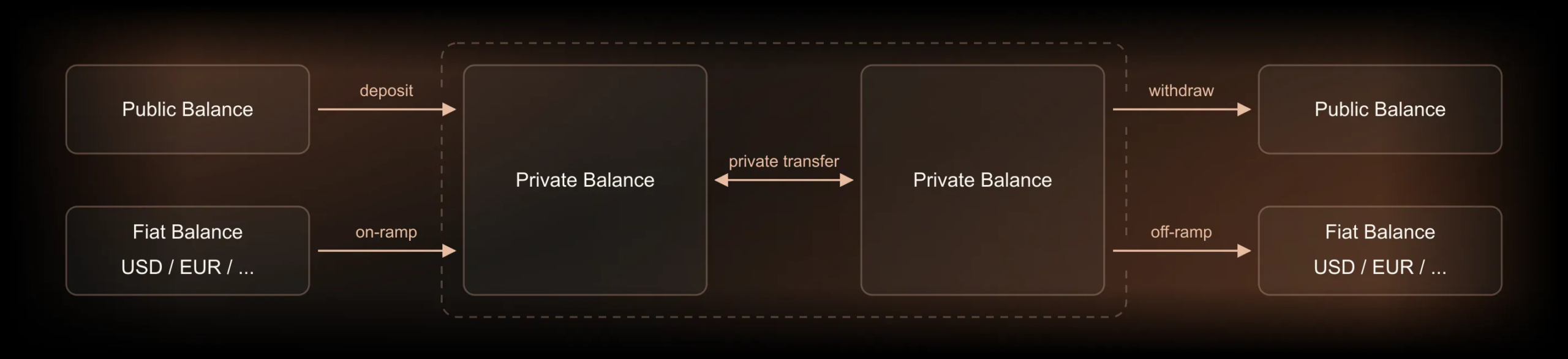
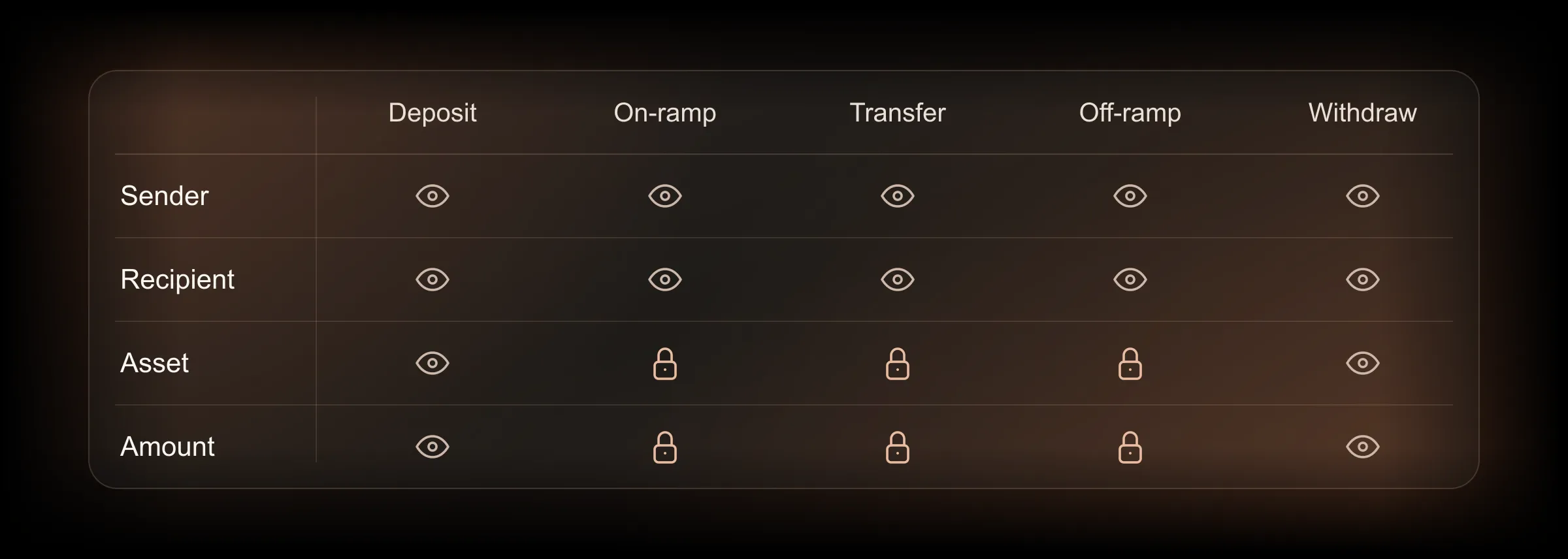
That protection does not apply equally to every step. When a user deposits assets from a public balance into the Ring or withdraws them back to a public balance, the asset and amount are visible on the public ledger. The confidential-transfer step encrypts those details. Helius says the system supports native SOL, standard SPL tokens and Token-2022 extension tokens, with encrypted state stored on Solana and transactions verified and settled on the mainnet.
What can a developer use?
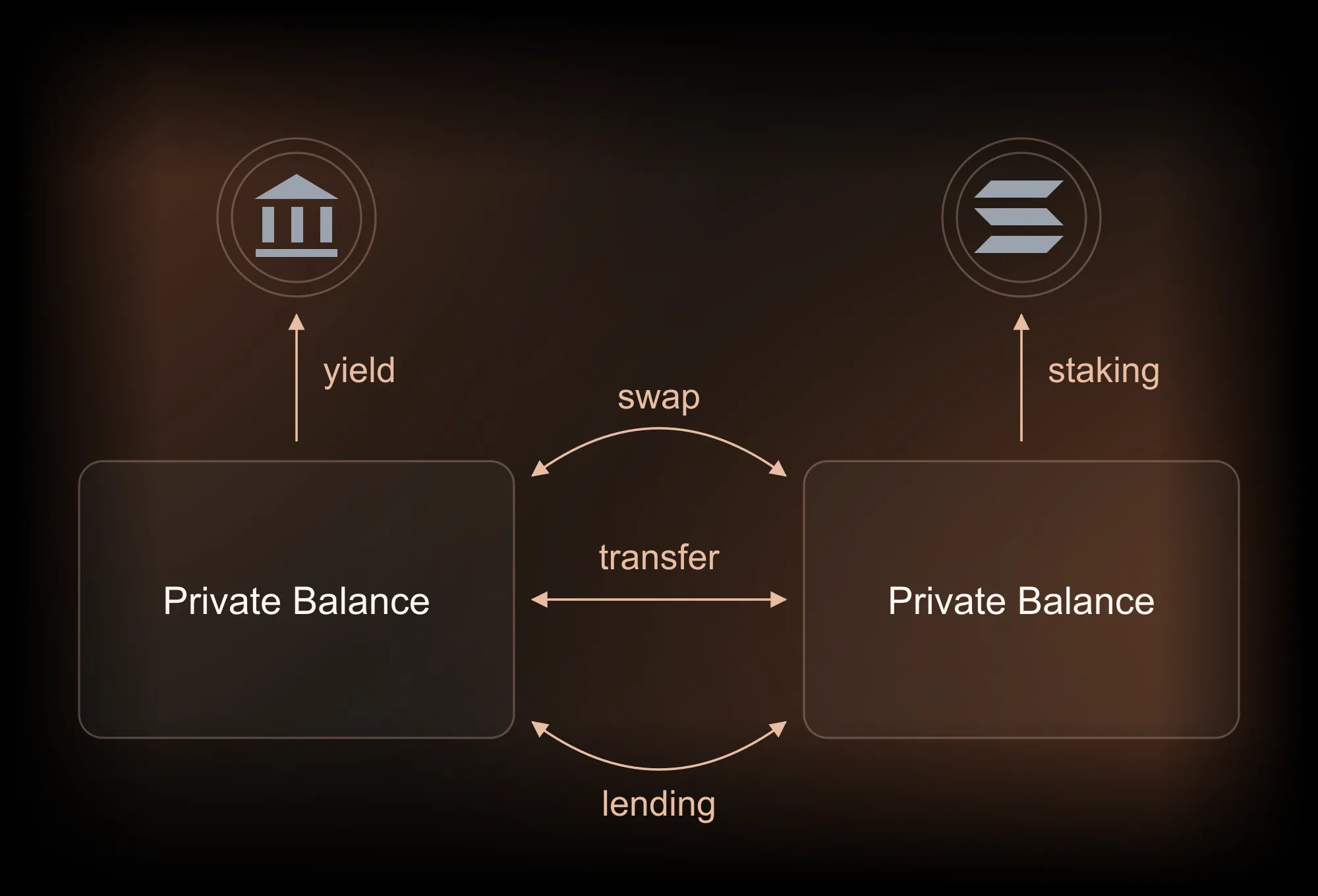
Helius describes a workflow of depositing into a private balance, transferring between wallets and withdrawing to a public balance. It says its TypeScript and Rust SDKs cover those operations and balance checks. A single Helius URL provides access to Solana RPC, indexing and remote proof generation, while dedicated privacy RPC methods retrieve shielded transactions and encrypted outputs.
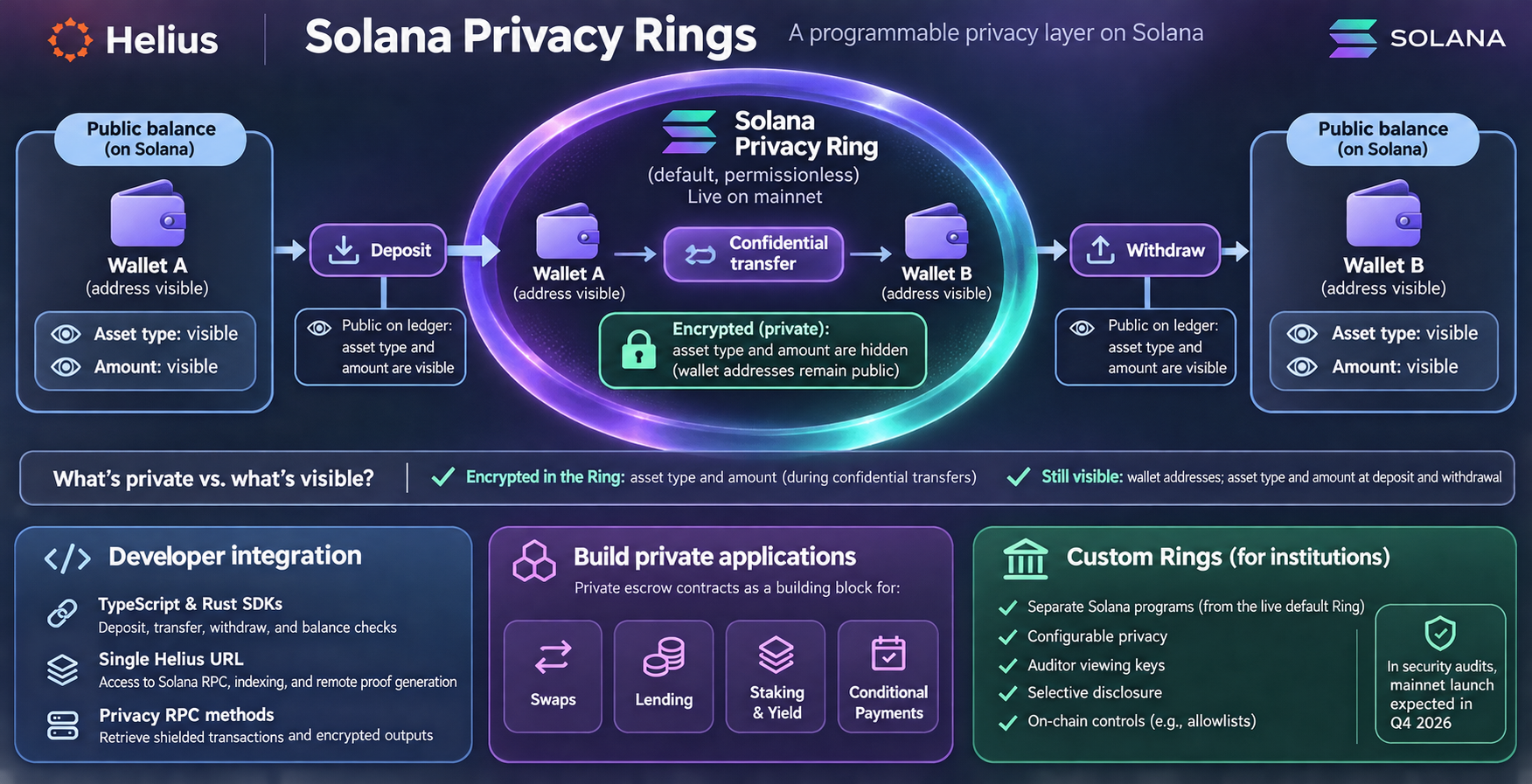
Helius also describes private escrow contracts as a building block for swaps, lending, staking, yield applications and conditional payments. These are described capabilities and use cases—not evidence that every such application was available or adopted. The report names Decrypt, Ore and Aurora Intents among products using the default Ring, while saying other integrations and private fiat on- and off-ramps were still in development.
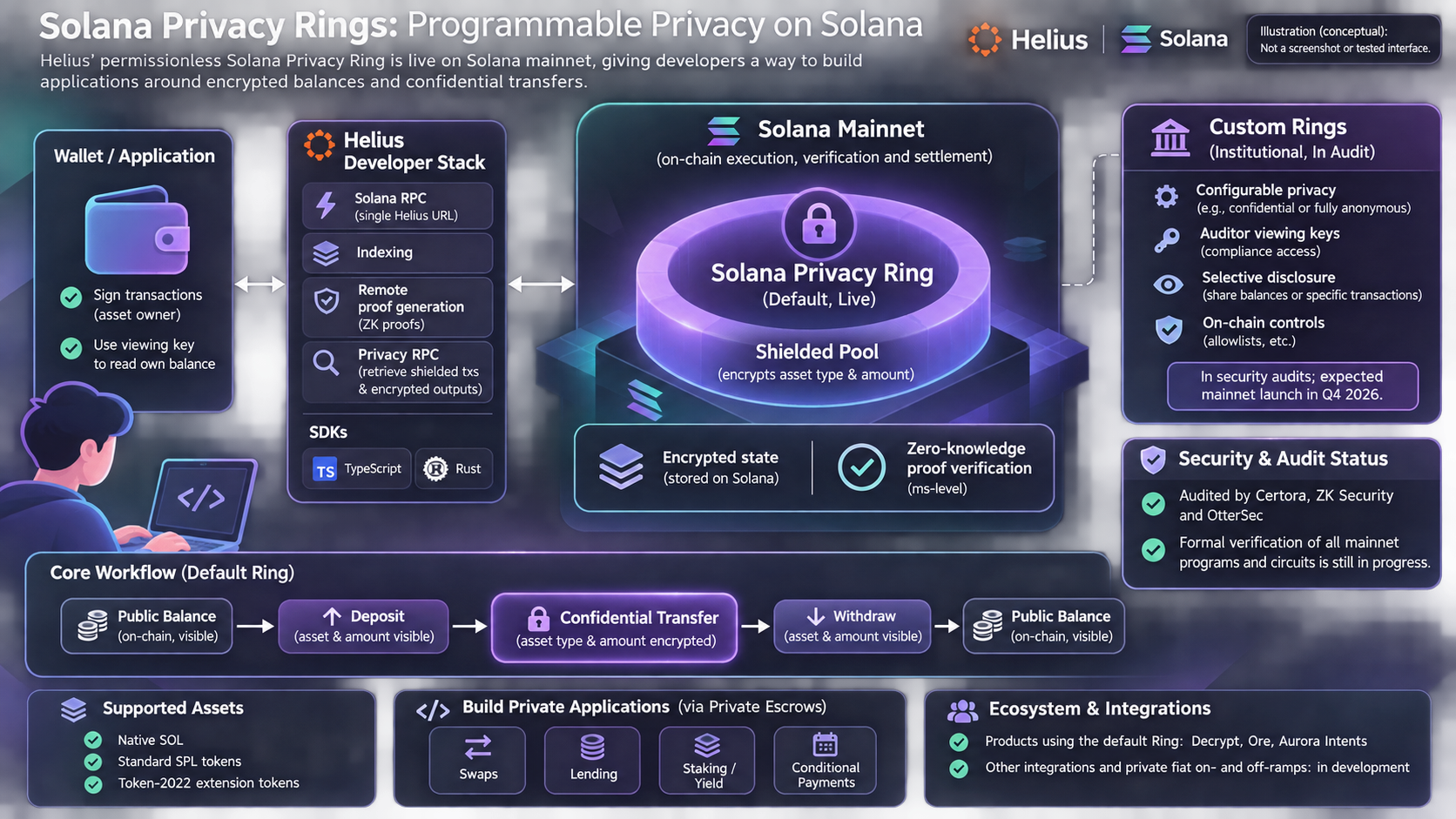
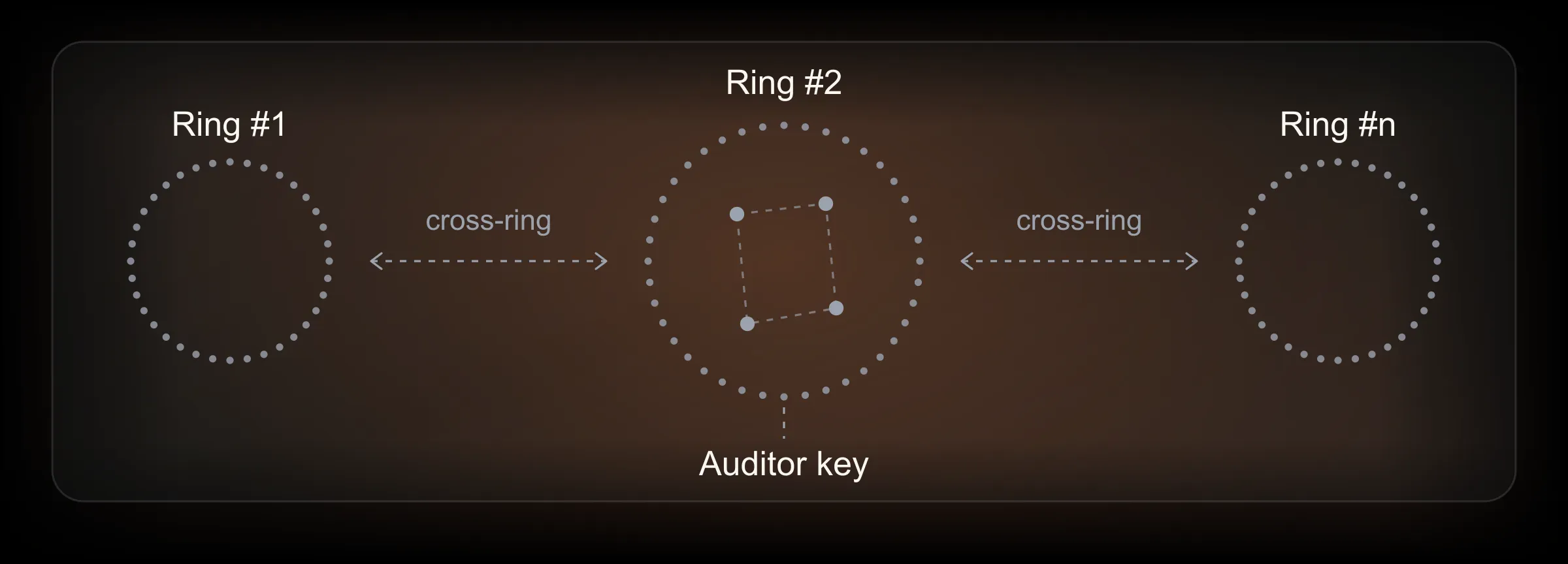
For institutions, the proposed Custom Rings would run as separate Solana programs with configurable privacy, auditor viewing keys, selective disclosure and on-chain controls such as allowlists. Those features should not be confused with the live permissionless Ring. Helius said Certora, ZK Security and OtterSec had audited the core program and zero-knowledge circuits; formal verification of all mainnet programs and circuits was still in progress at the time of the report.